



















Training Required for AI for Startups: Skills, Tools, and Practices
Learn the essential training required for AI for Startups, covering AI basics, data literacy, tools, ethics, and skills needed for scalable growth.

Artificial intelligence is becoming a core capability for modern startups. From automating workflows to generating insights and improving customer experiences, AI is no longer optional. However, technology alone does not guarantee success. The real differentiator lies in how well teams are trained to understand, use, and manage AI systems. For this reason, training is a critical foundation of AI for Startups.
Many startups adopt AI tools without investing in structured learning, resulting in poor implementation, low adoption, and unreliable outcomes. Effective training ensures that AI solutions are used responsibly, efficiently, and strategically. For startups aiming to scale, proper training turns AI from a tool into a long-term business asset.
Why Training Is Essential in AI for Startups
Startups operate in fast-moving environments where mistakes can be costly. Without the right knowledge, teams may misuse AI tools, misinterpret outputs, or rely on flawed data. Training helps avoid these risks while maximizing value.
Key reasons training matters:
- Improves understanding of AI capabilities and limitations
- Enables better decision-making using AI insights
- Reduces dependency on external vendors
- Increases team confidence and adoption
- Ensures ethical and secure AI usage
In the context of AI for Startups, training ensures that innovation is backed by competence and accountability.
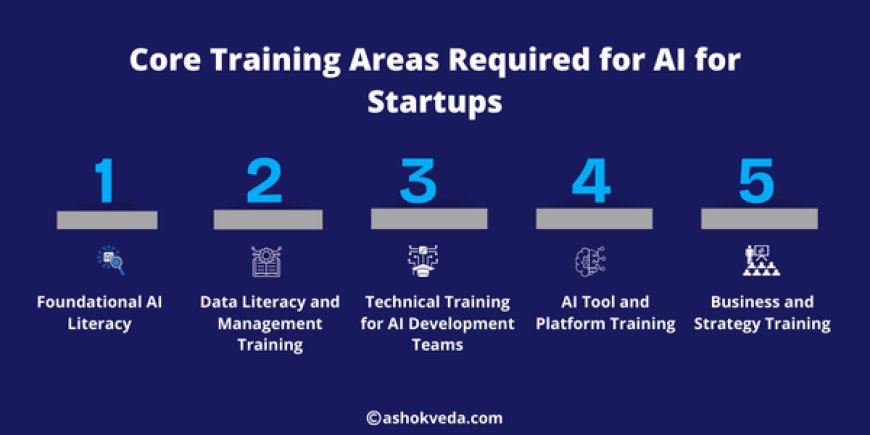
Core Training Areas Required for AI for Startups
Training should not be limited to developers alone. Founders, managers, and non-technical teams all need a basic understanding of AI.
1. Foundational AI Literacy
Every startup team should begin with AI fundamentals. This ensures a shared understanding across departments.
Topics include:
- What AI and machine learning are
- Types of AI models
- Realistic expectations from AI
- Common AI use cases in startups
This baseline knowledge strengthens collaboration and sets realistic goals for AI for Startups initiatives.
2. Data Literacy and Management Training
Data is the backbone of AI. Without clean and well-managed data, AI outputs become unreliable.
Key training areas include:
- Data collection and validation
- Data labeling and preparation
- Data privacy and security basics
- Understanding data bias and errors
Strong data literacy is essential for building trustworthy AI for Startups solutions.
3. Technical Training for AI Development Teams
Technical teams require deeper, hands-on training to build, customize, and maintain AI systems.
This includes:
- Machine learning algorithms
- Model training and evaluation
- API integrations
- Model deployment and monitoring
Skilled technical teams reduce long-term costs and strengthen the internal capabilities of AI for Startups.
4. AI Tool and Platform Training
Many startups use cloud-based or low-code AI platforms. Training ensures these tools are used efficiently.
Areas of focus include:
- Platform setup and configuration
- Workflow automation
- Model fine-tuning
- Performance tracking
Proper tool training ensures faster ROI from AI for Startups investments.
5. Business and Strategy Training
AI should align with business objectives, not operate in isolation. Founders and managers must understand how to use AI strategically.
Training topics include:
- Identifying high-impact AI use cases
- Measuring AI ROI
- Scaling AI solutions
- AI-driven decision-making
This alignment helps AI for Startups drive growth rather than confusion.
Ethics, Security, and Compliance Training
Trust is a core pillar of EEAT, and responsible AI adoption depends on strong ethical foundations. Startups must ensure AI systems are transparent, fair, and secure.
Important training areas include:
- Ethical AI principles and responsible usage
- Bias detection and mitigation techniques
- Secure data handling and privacy protection
- Regulatory and compliance awareness
Ethics-focused training helps AI for Startups reduce risk, protect user data, and meet legal standards. By embedding ethics and security into AI development, startups can build long-term trust with users, partners, and regulators while ensuring sustainable and compliant innovation.
Role-Based Training Approach for AI for Startups
Not every team member requires the same depth of AI knowledge. A role-based training approach improves efficiency and relevance across teams.
Training by role:
- Founders: AI strategy, risk management, and governance
- Managers: AI-driven planning and performance measurement
- Developers: Model development, deployment, and system integration
- Marketing and Sales: AI-powered analytics, personalization, and automation
- Support Teams: AI tools for customer service and engagement
Tailored learning ensures faster adoption, clearer accountability, and better outcomes. This approach helps AI for Startups maximize impact while aligning AI capabilities with real business goals.
Continuous Learning and Upskilling
AI technologies evolve quickly, making continuous learning essential for long-term success. One-time training programs cannot keep pace with rapid advancements.
Startups should encourage:
- Regular skill updates aligned with new AI tools and trends
- Hands-on experimentation with real-world use cases
- Internal AI knowledge sharing across teams
- Continuous performance reviews and feedback
A strong learning culture helps teams adapt faster, improve implementation quality, and reduce skill gaps. By prioritizing upskilling, AI for Startups can stay innovative, competitive, and prepared for future technological shifts.
Training Delivery Methods for Startups
Startups need flexible and cost-effective training models to match their fast-paced environments. Choosing the right delivery method improves learning outcomes and adoption.
Common methods include:
- Online courses and industry-recognized certifications
- In-house workshops for team-specific learning
- Mentorship programs and expert-led sessions
- Project-based learning with real startup use cases
A blended training approach combines theory with hands-on experience, enabling practical implementation. This ensures teams can apply skills directly to business challenges, helping AI for Startups accelerate innovation, improve efficiency, and achieve measurable results.
Measuring Training Effectiveness
Training initiatives must deliver measurable improvements to justify investment and drive results. Clear evaluation helps startups understand real impact.
Metrics to track include:
- AI adoption rates across teams
- Reduction in errors and rework
- Improvements in automation efficiency
- Accuracy and quality of AI-driven decisions
- Overall business impact and ROI
Regular measurement highlights skill gaps, optimizes future training, and aligns learning with business objectives. By tracking outcomes consistently, AI for Startups can ensure training efforts directly contribute to growth, performance improvement, and long-term scalability.
Cost Considerations for AI Training
AI training requires upfront investment, but it helps startups avoid expensive errors and inefficiencies. Strategic training delivers long-term financial benefits.
Cost benefits include:
- Reduced dependence on external consultants
- Faster and smoother AI implementation
- Improved system reliability and performance
- Higher productivity across teams
Well-trained teams make better decisions, optimize resources, and minimize rework. Over time, structured training lowers operational costs and increases returns. By investing wisely in learning, AI for Startups can maximize ROI, build internal expertise, and scale AI initiatives sustainably.
Future of Training in AI for Startups
As AI tools become more accessible, training will shift from technical complexity to practical application. Startups will focus on using AI effectively rather than building everything from scratch.
Key future trends include:
- Greater adoption of low-code and no-code AI platforms
- Guided, role-based learning paths
- Emphasis on decision-making and ethical AI use
- Continuous, application-driven upskilling
In the coming years, success will depend on how well teams apply AI responsibly. Startups that invest in structured training today will be better equipped to adapt, scale operations, and drive sustained innovation.
AI success is driven by people, not just technology. Tools deliver results only when teams know how to use them effectively, responsibly, and with clear intent. Structured training empowers startup teams to implement AI with confidence, ethical awareness, and strategic focus. It reduces risk, improves decision-making, and ensures real business impact. For sustainable growth, training should be viewed as a core investment rather than an optional cost. With strong learning foundations in place, AI for Startups becomes a catalyst for innovation, efficiency, scalability, and long-term competitive advantage.