























Regulatory Aspects of AI for Startups: A Complete Guide
Understand key regulatory aspects of AI for Startups, including data privacy, compliance, ethics, and global AI laws, to build responsible AI products.

Artificial intelligence is transforming how startups build products, automate processes, and scale faster than ever before. From chatbots to predictive analytics, AI for startups has become a core growth driver across industries. However, with increasing adoption, governments and regulators are paying closer attention to how AI systems are developed and used.
Understanding the regulatory aspects of AI for startups is now essential. Compliance is no longer optional, especially for startups handling user data, automated decision-making, or AI-driven personalization. This guide explains AI regulations in simple language and helps startups align innovation with legal and ethical responsibilities.
Understanding AI Regulation: Why It Matters for Startups
AI regulation includes laws, guidelines, and standards that control how artificial intelligence systems are designed, deployed, and operated. These regulations aim to protect users, safeguard data, and ensure that AI is used responsibly while still supporting innovation and business growth.
For AI for startups, regulation is especially important because startups often handle sensitive data, automate critical decisions, and shape customer experiences at scale. Without proper compliance, even small mistakes can lead to serious legal and reputational consequences.
Key reasons regulations are important:
-
Protect user privacy and data security
-
Prevent misuse, bias, and discrimination
-
Ensure transparency and accountability in AI systems
-
Build trust with customers, partners, and investors
-
Reduce long-term legal and operational risks
Ignoring regulations may offer short-term speed, but it can significantly slow sustainable growth later.
Global AI Regulations: What Startups Need to Know
AI regulations differ across regions, but most are built on shared principles such as fairness, transparency, accountability, and data protection. Startups operating across borders must understand and adapt to multiple regulatory frameworks to avoid compliance risks.
Major global approaches include:
-
Risk-based regulation models that classify AI by impact
-
Strong data protection and privacy laws
-
Ethical AI guidelines promoting responsible development
-
Industry-specific compliance standards for sensitive sectors
For AI for Startups, awareness of global regulatory trends supports smarter system design, smoother international expansion, and long-term compliance from the earliest stages of product development.
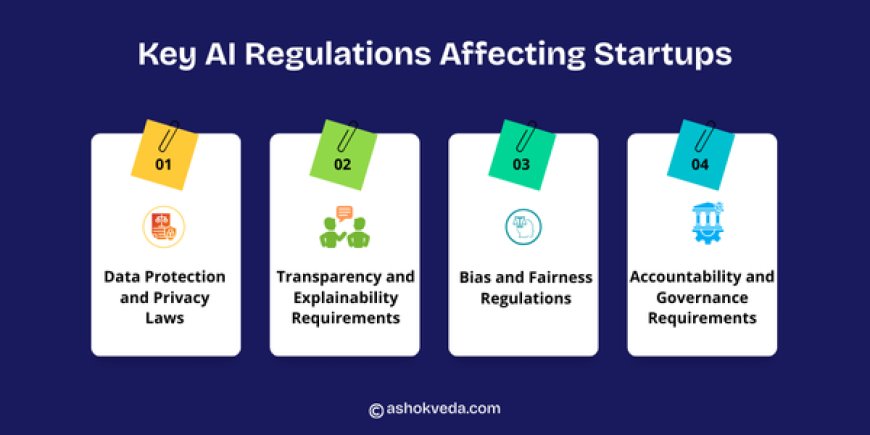
Key AI Regulations Affecting Startups
1. Data Protection and Privacy Laws
AI systems depend heavily on data, making privacy laws one of the most critical regulatory areas.
Common regulations include:
-
GDPR (Europe)
-
DPDP Act (India)
-
CCPA (California)
These laws impact AI for Startups by requiring:
-
User consent for data collection
-
Secure data storage and processing
-
Clear purpose limitation
-
Rights for users to access or delete data
Startups must ensure AI models only use legally obtained and properly protected data.
2. Transparency and Explainability Requirements
Many regulations require AI systems to be explainable, especially when they influence decisions affecting people.
Transparency expectations include:
-
Clear disclosure of AI usage
-
Explanation of automated decisions
-
Ability to audit AI outcomes
For AI for Startups, this means avoiding “black box” systems where decisions cannot be explained. Explainable AI builds trust with regulators and users alike.
3. Bias and Fairness Regulations
AI models can unintentionally amplify bias if trained on unbalanced data. Regulators increasingly focus on fairness and non-discrimination.
Compliance expectations include:
-
Bias testing and documentation
-
Fair training datasets
-
Regular monitoring for discriminatory outcomes
Startups using AI for Startups in hiring, lending, healthcare, or marketing must be especially careful to prevent unfair treatment.
4. Accountability and Governance Requirements
Regulations emphasize that humans—not AI—are ultimately responsible for decisions.
Governance requirements include:
-
Clear ownership of AI systems
-
Defined escalation paths
-
Human oversight of critical decisions
For AI for Startups, this means setting internal policies that define who approves, monitors, and audits AI-driven actions.
Risk-Based AI Regulation Models
Many governments are moving toward risk-based regulation instead of restricting AI entirely. This approach allows innovation while ensuring appropriate safeguards based on potential impact.
Typical risk categories include:
-
Low-risk AI: Chatbots, content recommendations, and basic automation
-
Medium-risk AI: Credit scoring systems and targeted advertising tools
-
High-risk AI: Healthcare diagnostics, biometric identification, and surveillance
For AI for Startups, understanding these risk levels helps teams focus compliance efforts where they matter most. It enables better resource planning, reduces regulatory exposure, and ensures responsible AI deployment aligned with legal expectations.
Ethical AI Guidelines and Their Regulatory Role
Ethical AI guidelines play a crucial role in shaping formal regulations and industry standards. While these principles may not always be legally binding, they strongly influence regulatory audits, business partnerships, and investor decisions.
Common ethical principles include:
-
Fairness in AI-driven outcomes
-
Transparency in data usage and decision-making
-
Accountability for AI system behavior
-
Privacy protection for user data
-
Safety and reliability of AI systems
For AI for Startups, aligning development practices with ethical guidelines reduces compliance risk and builds long-term trust. Startups that adopt ethical AI early are better prepared for evolving regulations and responsible innovation.
Industry-Specific Regulations for AI Startups
Some industries face stricter AI regulations because AI systems can directly affect health, finances, or personal rights. Startups operating in these sectors must meet higher compliance standards.
Examples include:
-
Healthcare: Patient data protection, clinical accuracy, and regulatory validation
-
Finance: Algorithmic accountability, risk management, and fraud prevention
-
Education: Student data privacy, fairness, and responsible use of analytics
-
E-commerce: Consumer protection, transparency, and ethical personalization
Startups implementing AI for startups in regulated industries must comply with both general AI regulations and industry-specific rules to ensure safe, lawful, and trustworthy AI deployment.
Compliance Challenges Faced by Startups
Startups often face difficulties with regulatory compliance due to limited budgets, small teams, and rapidly evolving business models. The fast pace of AI development can make it harder to keep up with changing rules.
Common challenges include:
-
Lack of in-house legal and compliance expertise
-
Frequent updates to AI models and systems
-
Scaling operations across regions with different regulations
-
Balancing innovation speed with regulatory requirements
Despite these challenges, compliance should be viewed as a strategic advantage. For AI for Startups, strong compliance practices support trust, scalability, and long-term sustainable growth.
Building a Regulatory-Ready AI Strategy
Startups can reduce compliance complexity by embedding regulatory requirements into AI product design from the very beginning. This approach prevents costly changes later and supports responsible innovation.
Best practices include:
-
Implementing privacy-by-design and secure data architecture
-
Adopting ethical AI frameworks for development and deployment
-
Conducting regular risk and impact assessments
-
Maintaining clear documentation of AI decisions and processes
A proactive compliance strategy helps systems remain flexible and trustworthy. For AI for Startups, early regulatory alignment ensures smoother scaling and readiness for future regulatory changes.
Role of Documentation and Audits
Regulators expect startups to provide clear evidence of compliance, not just verbal or policy-level assurances. Proper documentation proves that AI systems are developed and used responsibly.
Important documentation includes:
-
Data sources, user consent records, and usage permissions
-
Details of model training methods and datasets
-
Bias testing procedures and evaluation results
-
Records of system updates, changes, and version history
Maintaining accurate and organized records enables faster audits and smoother reviews. For AI for Startups, strong documentation practices reduce regulatory risk and support transparency, accountability, and long-term trust.
Future Trends in AI Regulation
AI regulations continue to evolve as technologies become more advanced and widely adopted. Governments are working to balance innovation with safety, fairness, and accountability.
Expected future trends include:
-
Stricter compliance requirements for high-risk AI applications
-
Mandatory AI impact and risk assessments before deployment
-
Greater alignment between global regulatory frameworks
-
Increased emphasis on ethical governance and responsible AI use
Startups that anticipate these changes can reduce disruption and compliance costs. By preparing early, AI for Startups can adapt faster, scale responsibly, and maintain long-term trust with users, regulators, and partners.
Regulatory compliance is a critical pillar of successful AI adoption. While regulations may seem complex, they exist to protect users, businesses, and society. For startups, understanding and applying these rules early reduces risk and builds trust. By designing responsible systems, documenting processes, and fostering ethical awareness, AI for Startups can innovate confidently within regulatory boundaries. Startups that treat compliance as a strategic investment, not a burden, will be better positioned to scale, compete, and succeed in the evolving AI-driven economy.